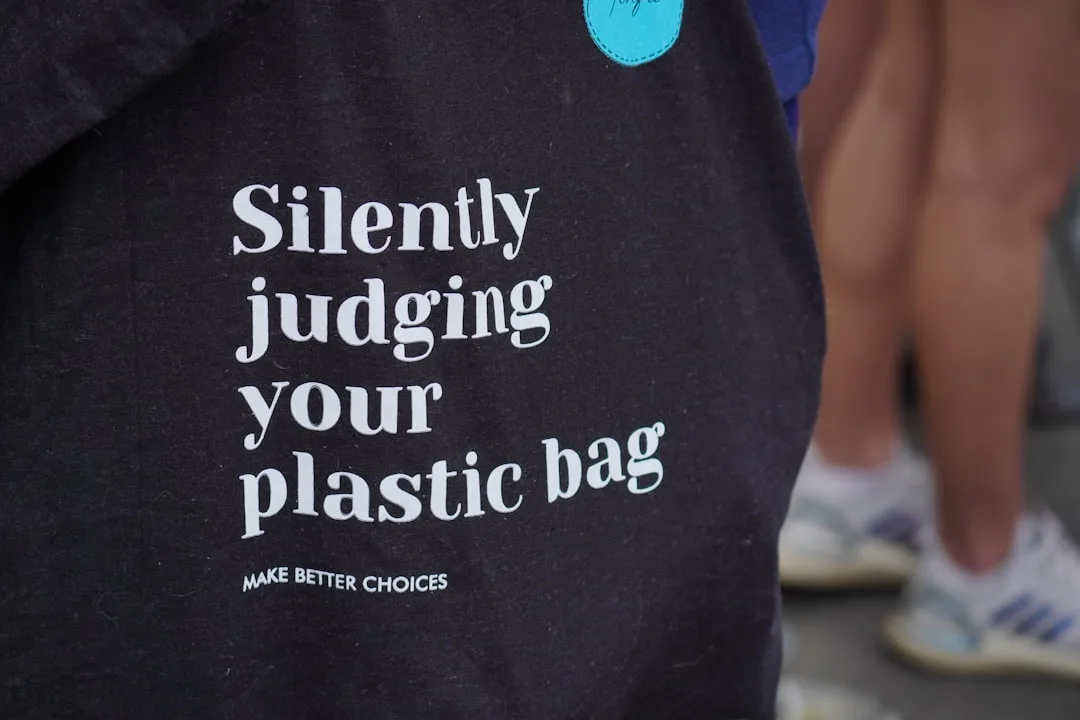
Remember when the UK government introduced the 5p plastic bag charge back in 2015? It felt like a win for the planet — finally, fewer single-use plastics, more conscious choices, cleaner oceans.Fast forward a few years, and what do we have instead? “Bags for life” — thicker, heavier, and made with even more plastic than before.We’ve basically upgraded our guilt.
From Progress to Plastic 2.0.
The original idea was solid: charge a small fee to make people think twice before grabbing another disposable bag. And it worked — at first. Plastic bag use dropped by over 80% in major supermarkets. But then retailers started pushing bags for life, made from much thicker plastic. These bags cost more, yes — but they’re also designed to be reused… in theory. In reality? Most people treat bags for life like the old single-use ones. They pile up in cupboards, cars, and drawers — and when they rip (because they do), we buy another. Each “bag for life” uses up to four times more plastic than a regular one. So if we’re buying them more often, we’re actually making the plastic problem worse.
So Where Does the Money Go?
You’d think all those 10p or 20p bag charges are funding eco-projects or cleaning beaches, right? Not quite. Supermarkets are encouraged to donate proceeds to “good causes,” but it’s not a legal requirement. Some donate to charities, others funnel it into sustainability campaigns — and some, frankly, keep it to cover “operational costs.” Transparency? Patchy at best. In 2023, only a fraction of retailers publicly disclosed where the money went — and even less could show genuine environmental impact.So while customers are paying more at the checkout, there’s no guarantee the planet is seeing the benefit.
We Can Do Better Than “Bag for Life”
The issue isn’t the bag — it’s the mindset. We’re still stuck in a linear loop: buy, use, toss, repeat. The circular economy asks a better question: “Why make new at all when we can keep using what we already have?” Here’s how we flip the script: Bring what you already own. Old tote? Perfect.Share and swap. Got too many reusable bags? Give some to a friend (or swap them on Swapster!).Choose non-plastic options. Canvas, jute, or recycled fabric bags last years and don’t shed microplastics.Circularity starts with small habits — and this one’s an easy win.
The Bottom Line
Charging for single-use bags was a good start, but it’s not the solution anymore. We’ve simply created a new category of disposable product, wrapped in a green label. Real change comes from rethinking the whole system — not just pricing it differently. If we’re serious about cutting plastic, we have to design for reuse, value durability, and keep materials circulating for as long as possible. Because the ultimate “bag for life”? It’s the one you’ve had for ten years — and still use.'
