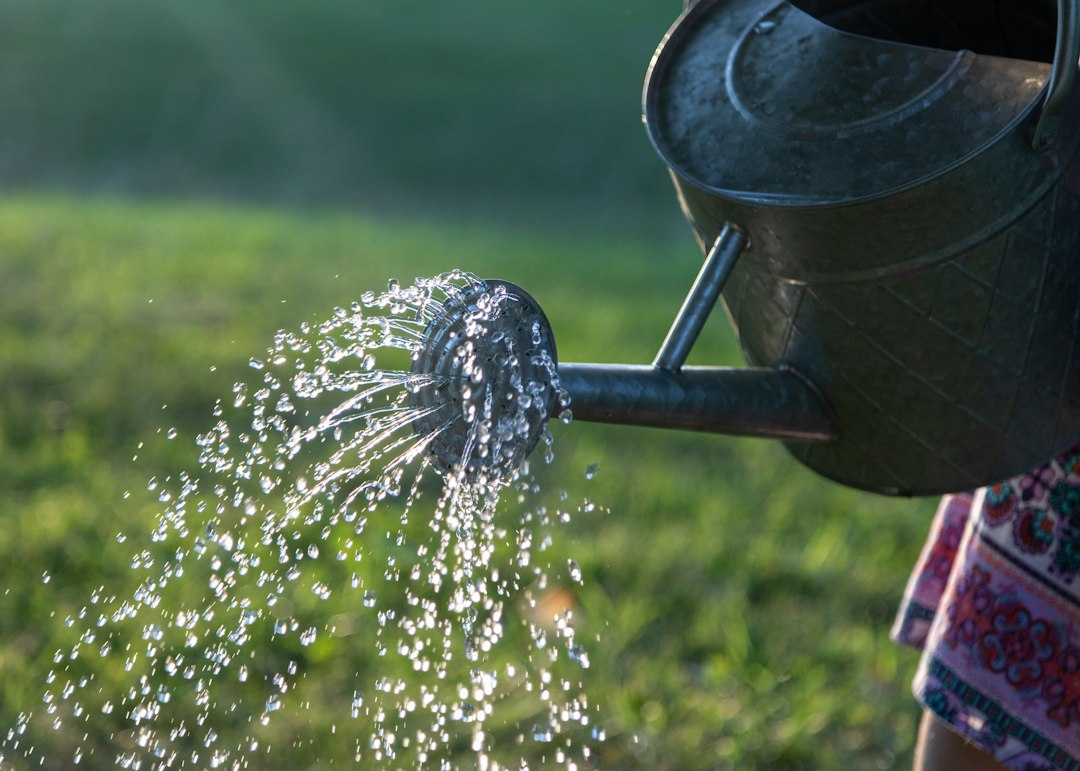
In 2025, the UK had its warmest year since records began in 1884, and a spring that was the driest in England for more than a century. Hosepipe bans followed. Most advice on saving water starts and ends at the bathroom tap. The bigger story is the water, and the carbon, that sits inside the things we buy, use and throw away, and what happens when we keep those things in use for longer.
What Climate Change Is Doing to the UK's Water
The Met Office's State of the UK Climate report found that the last four years are all in the UK's top five warmest, and that 2016–2025 was 1.33°C warmer than 1961–1990. Spring 2025 saw most of England and Wales receive less than half the 1991–2020 average rainfall, and river flows from March to August were the second lowest since 1961 (Met Office). Temporary use bans, usually called hosepipe bans, were brought in by Yorkshire Water, South East Water, Thames Water and Southern Water in 2025, and Southern Water customers were back under a ban in July 2026.
The Environment Agency's long-term picture is starker. It warns that England faces a 5 billion litre a day shortfall in public water supplies by 2055, around a third of today's daily use, with a further 1 billion litres a day needed for energy, food and new technologies. Using water more carefully matters. So does making less demand for it in the first place.
The Water You Never See
The average person in the UK uses around 142 litres of water a day at home, and 46% of people in a Water UK and Waterwise survey believed their household used under 20 litres. But the water coming out of our taps is the smaller share of our footprint. Everything we buy took water to make: WWF estimates a single cotton t-shirt takes around 2,700 litres, roughly what one person drinks over two and a half years. We looked at this in more detail in Water Consumption in Manufacturing: The Hidden Costs.
How Swapping Prevents New Emissions
Every new product has an upfront carbon and water cost before you ever use it: raw materials, manufacturing, packaging and transport. When you swap for something that already exists, that cost has already been paid, and a new one is not triggered. The swap displaces a purchase.
The clearest evidence comes from clothing. WRAP, the UK's resource-efficiency charity, found that extending the active life of clothes by an extra nine months would cut their carbon, waste and water footprints by around 20–30% each, and describes extending clothing life as the single largest opportunity to reduce those footprints. Swapping is one of the most direct ways to do it: the jacket that has gone quiet in your wardrobe starts a second working life with someone else, instead of a new one being made.
Landfill Emissions: The Methane Problem
When biodegradable material is buried in a landfill, it breaks down without oxygen and releases methane. According to the UK's final greenhouse gas statistics, the waste sector was responsible for around 6% of UK emissions in 2024. Landfill made up 55% of that, and methane was 77% of the waste sector's emissions. The good news is that waste emissions are down 61% since 1990, thanks to better landfill standards, less biodegradable waste going in and more landfill gas being captured for energy.
Methane matters because it is a far stronger greenhouse gas than carbon dioxide: the IPCC's Sixth Assessment Report puts it at around 27 times more warming than CO2 over 100 years, and around 80 times over 20 years. Globally, landfills and wastewater account for about 20% of human-caused methane emissions, according to the UN Environment Programme. Most of that methane comes from organic material, such as food, paper, card, wood and natural textiles, so keeping clothes, books, furniture and household goods in use rather than in the bin helps directly. Not every swapped item would have rotted in landfill, but it all adds up to less going in.
Repurposing Things to Save Water
Rain is free, and a lot of it lands on roofs. The Royal Horticultural Society notes that in dry south-east England, 2,500–3,500 litres of rainwater a year can be collected from the roof of a small shed, enough to fill 10–15 standard 240-litre water butts. As a rule of thumb, every millimetre of rain falling on a square metre of roof is one litre of water, before losses. Using it on the garden means less mains water, and less treated drinking water going on lawns and borders during the driest weeks.
- Second-hand water butts. Butts are often replaced when a garden is redesigned or a house is sold. Swapping for a used one keeps a perfectly good tank out of the skip.
- Linked butts. Chaining two or three together with a connector kit multiplies your storage, so a wet week fills them and a dry fortnight doesn't empty them.
- Food-grade barrels, drums and bins. If you know a container has only ever held food or drink, it can become a rain barrel. Avoid anything that held chemicals.
- Spare guttering and downpipe. Offcuts and old lengths from a refit can feed rain from a shed, greenhouse or garage roof into a barrel.
- Old baths and sinks. Set into the ground, they make troughs and ponds, or sit upright as raised water stores for wildlife and plants.
- Watering cans. Watering by hand with stored rain uses far less than a hosepipe. Spare cans are cheap and easy to swap.
Whatever you use, give it a close-fitting lid. The RHS recommends one to keep rain-borne plant disease spores out of the water, and it also keeps debris, insects and small children out.
Swap Your Way to a Lower-Impact Garden
You don't have to buy any of this new. Browse Garden & DIY on Swapster for garden tools and equipment, such as watering cans and spades, and sheds and garden storage. Got a spare butt, a roll of guttering or a stack of plant pots? List it and see what you can trade for. It is the same idea as any other swap: the thing already exists, so use it. There's more on how this fits together in our guide to the circular economy.
Small Swaps, Real Savings
- Swap before you buy. Check whether someone nearby already has what you need.
- Keep things in use longer. Repair, re-wear and pass on rather than bin.
- Catch the rain. Even one butt on a shed or garage roof helps.
- Pass on what you no longer use. One person's spare is another's missing piece, and swap sites make that easy to find.
FAQ
Swapping keeps existing items in use, so fewer new ones need to be made. That avoids the emissions and water used in manufacturing and transport, and keeps items out of landfill, where biodegradable waste produces methane.
Yes. Making products uses large amounts of water. WWF estimates a cotton t-shirt takes around 2,700 litres, and WRAP found that extending clothing life by nine months would cut the sector's water footprint by around 20–30%.
As a rough rule, one millimetre of rain on one square metre of roof is one litre, before losses. The RHS says a small shed roof in dry south-east England can collect 2,500–3,500 litres a year.
Only if it has previously held food or drink, never chemicals. Give it a close-fitting lid, and make sure it is stable and out of reach of small children.
Biodegradable waste buried in landfill breaks down without oxygen and releases methane, a greenhouse gas around 27 times stronger than carbon dioxide over 100 years.
References
- Met Office, Climate extremes are becoming the new normal for the UK (State of the UK Climate 2025).
- GOV.UK, England faces 5 billion litre public water shortage by 2055 without urgent action, Environment Agency, 17 June 2025.
- Water Magazine, England's 2025 drought: lessons from a record-breaking water year, January 2026.
- ITV News, Hosepipe ban comes into force for a million Southern Water customers, 10 July 2026.
- Water UK and Waterwise, Vast majority of Brits have no idea how much water they use each day, September 2020.
- WWF, The impact of a cotton t-shirt.
- WRAP, Extending product lifetimes: WRAP's work on clothing durability.
- DESNZ, Final UK greenhouse gas emissions statistics (5 February 2026), summarised by letsrecycle.com.
- IPCC, Sixth Assessment Report, Working Group I, Chapter 7: The Earth's energy budget, climate feedbacks and climate sensitivity (methane global warming potential).
- UNEP and Climate & Clean Air Coalition, Global Methane Assessment: Benefits and Costs of Mitigating Methane Emissions, 2021.
- Royal Horticultural Society, Water: collecting, storing and re-using.
